Inside Congress: Alabama To DC streaming with english subtitles 1280
qwilsonpaulnv.bitballoon.com› Inside Congress: Alabama To DC streaming with english subtitles 1280 █ █ █
Johnston (Frances Benjamin) Collection; Highsmith (Carol M.) Archive; Liljenquist Family Collection of Civil War Photographs; Historic American Buildings Survey. While Congress has yet to pass a budget, the Trump administration has drawn how it would like to see the federal government “reshaped,” and most anticipate that.
United States Congress - Wikipedia. United States Congress. United States Congress. Type. Type. Houses. Senate. House of Representatives. History. Founded.
March 4, 1. 78. 9(2. Preceded by. Congress of the Confederation. New session started. January 3, 2. 01. Leadership. Structure. Seats. 53. 5 voting members.
House of Representatives political groups. Senate political groups. Elections. House of Representatives last election.
ALABAMA MEDIA GROUP DONATES MASSIVE PHOTOGRAPHIC NEGATIVE COLLECTION TO THE ALABAMA DEPARTMENT OF ARCHIVES AND HISTORY. Sterilization by Laparoscopy, an ACOG patient education FAQ, explains risks and benefits of this tubal ligation method, a permanent form of birth control. NavSource Online: Battleship Photo Archive BB-8 USS ALABAMA Radio Call Sign: November - Bravo - Oscar. EPA has extended the deadline for comments on its proposed definition of “small” businesses that are exempt from, or subject to less strict, Toxic Substances.
Get the most recent Washington DC sales tax rates. Download a free sales tax rate table for Washington DC (DC). Get more info on Washington DC sales tax laws.


- Breaking news, weather, radar, traffic, sports from FOX 5 DC for Washington, DC, Maryland and northern Virginia - WTTG-TV.
- Wi-Fi-FreeSpot Directory - locations that offer Free Wi-Fi. Every attempt is made to keep this Directory accurate. If you want to Add or Remove a Free Wi-Fi location.
- Unique in their scope and richness, the prints and photographs collections today number more than 14 million images. These include photographs, fine and popular.
November 8, 2. 01. Senate last election. November 8, 2. 01. Meeting place. United States Capitol. Washington, D. C., United States.
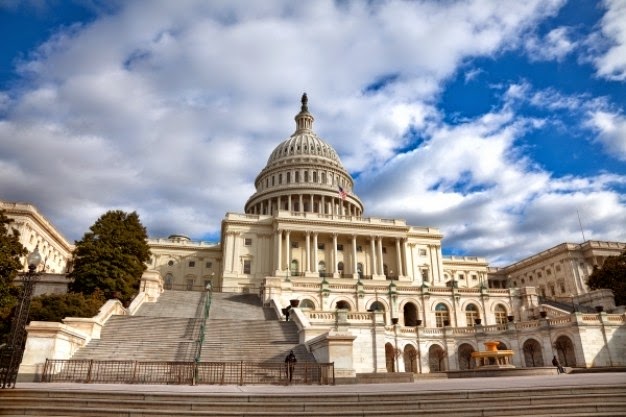
Websitewww. congress. The United States Congress is the bicameral legislature of the federal government of the United States consisting of two chambers: the Senate and the House of Representatives. The Congress meets in the Capitol in Washington, D. C. Both senators and representatives are chosen through direct election, though vacancies in the Senate may be filled by a gubernatorial appointment. Members are usually affiliated to the Republican Party or to the Democratic Party, and only rarely to a third party or as independents.
Congress has 5. 35 voting members: 4. Representatives and 1. Senators. The House of Representatives has six non- voting members in addition to its 4. These members can, however, sit on congressional committees and introduce legislation. These members represent Washington, D.
C., Puerto Rico, American Samoa, Guam, the Northern Mariana Islands and the U. S. Virgin Islands.
The members of the House of Representatives serve two- year terms representing the people of a single constituency, known as a . Congressional districts are apportioned to states by population using the United States Census results, provided that each state has at least one congressional representative.
Each state, regardless of population or size, has two senators. Currently, there are 1.
Each senator is elected at- large in their state for a six- year term, with terms staggered, so every two years approximately one- third of the Senate is up for election. Overview. However, the Constitution grants each chamber some unique powers. The Senate ratifies treaties and approves presidential appointments while the House initiates revenue- raising bills. The House initiates impeachment cases, while the Senate decides impeachment cases.
A Congress covers two years; the current one, the 1. Congress, began on January 3, 2. January 3, 2. 01. The Congress starts and ends on the third day of January of every odd- numbered year. Members of the Senate are referred to as senators; members of the House of Representatives are referred to as representatives, congressmen, or congresswomen.
Scholar and representative Lee H. Hamilton asserted that the . It reflects our regional idiosyncrasies, our ethnic, religious, and racial diversity, our multitude of professions, and our shadings of opinion on everything from the value of war to the war over values. Congress is the government's most representative body .. Congress is essentially charged with reconciling our many points of view on the great public policy issues of the day.—Smith, Roberts, and Wielen.
The Articles of Confederation in 1. Congress of the Confederation, a unicameral body with equal representation among the states in which each state had a veto over most decisions. Congress had executive but not legislative authority, and the federal judiciary was confined to admiralty. A compromise plan was adopted with representatives chosen by population (benefiting larger states) and exactly two senators chosen by state governments (benefiting smaller states).
Zelizer suggested there were four main congressional eras, with considerable overlap, and included the formative era (1. With the passage of the Constitution and the Bill of Rights, the Anti- Federalist movement was exhausted. Some activists joined the Anti- Administration Party that James Madison and Thomas Jefferson were forming about 1. Treasury Secretary Alexander Hamilton; it soon became the Democratic- Republican Party or the Jeffersonian Democrat Party and began the era of the First Party. Thomas Jefferson's election to the presidency marked a peaceful transition of power between the parties in 1. John Marshall, 4th Chief Justice of the Supreme Court empowered the courts by establishing the principle of judicial review in law in the landmark case Marbury v.
Madison in 1. 80. Supreme Court a power to nullify congressional legislation. The partisan era (1.
The watershed event was the Civil War which resolved the slavery issue and unified the nation under federal authority, but weakened the power of states rights. A Gilded Age (1. 87. Republican dominance of Congress. During this time, lobbying activity became more intense, particularly during the administration of President Ulysses S. Grant in which influential lobbies advocated for railroad subsidies and tariffs on wool. The Progressive Era was characterized by strong party leadership in both houses of Congress as well as calls for reform; sometimes reformers would attack lobbyists as corrupting politics.
The Senate was effectively controlled by a half dozen men. The committee era (1. A system of seniority—in which long- time Members of Congress gained more and more power—encouraged politicians of both parties to serve for long terms. Committee chairmen remained influential in both houses until the reforms of the 1.
Important structural changes included the direct election of senators by popular election according to the Seventeenth Amendment. Roosevelt's election in 1. Numerous New Deal initiatives came from the White House rather than being initiated by Congress. More complex issues required greater specialization and expertise, such as space flight and atomic energy policy. Kennedy narrowly won the presidency and power shifted again to the Democrats who dominated both houses of Congress until 1.
The contemporary era (1. The Republicans have been similarly disabled. Congress enacted Johnson's. Great Society program to fight poverty and hunger. The Watergate Scandal had a powerful effect of waking up a somewhat dormant Congress which investigated presidential wrongdoing and coverups; the scandal .
Political action committees or PACs could make substantive donations to congressional candidates via such means as soft money contributions. In 1. 97. 1, a delegate for the District of Columbia was authorized, and in 1. U. S. Virgin Islands and Guam.
American Samoa, and another for the Commonwealth of the Northern Mariana Islands began in 2. These six Members of Congress enjoy floor privileges to introduce bills and resolutions, and in recent congresses they vote in permanent and select committees, in party caucuses and in joint conferences with the Senate. They have Capitol Hill offices, staff and two annual appointments to each of the four military academies. While their votes are constitutional when Congress authorizes their House Committee of the Whole votes, recent Congresses have not allowed for that, and they cannot vote when the House is meeting as the House of Representatives. Sections One through Six describe how Congress is elected and gives each House the power to create its own structure.
Section Seven lays out the process for creating laws, and Section Eight enumerates numerous powers. Section Nine is a list of powers Congress does not have, and Section Ten enumerates powers of the state, some of which may only be granted by Congress. Congress also has implied powers derived from the Constitution's Necessary and Proper Clause. Congress has authority over financial and budgetary policy through the enumerated power to . There is vast authority over budgets, although analyst Eric Patashnik suggested that much of Congress's power to manage the budget has been lost when the welfare state expanded since .
In the Plame affair, critics including Representative Henry A. Waxman charged that Congress was not doing an adequate job of oversight in this case. Congress also has the exclusive power of removal, allowing impeachment and removal of the president, federal judges and other federal officers. Bush, Bill Clinton, and George W. Will called the Capitol building a . In addition, other congressional powers have been granted, or confirmed, by constitutional amendments. The Thirteenth (1.
Fourteenth (1. 86. Fifteenth Amendments (1.
Congress authority to enact legislation to enforce rights of African Americans, including voting rights, due process, and equal protection under the law. Virgin Islands, and the Northern Mariana Islands rests with Congress. House of Representatives as they have throughout Congressional history. Hamilton explained how Congress functions within the federal government: To me the key to understanding it is balance. The founders went to great lengths to balance institutions against each other—balancing powers among the three branches: Congress, the president, and the Supreme Court; between the House of Representatives and the Senate; between the federal government and the states; among states of different sizes and regions with different interests; between the powers of government and the rights of citizens, as spelled out in the Bill of Rights ..
No one part of government dominates the other. Its authors expected the greater power to lie with Congress as described in Article One. The impeachment of Andrew Johnson made the presidency less powerful than Congress for a considerable period afterwards. Roosevelt, Richard Nixon, Ronald Reagan, and George W. Nevertheless, the Presidency remains considerably more powerful today than during the 1. Congress is slow, open, divided, and not well matched to handle more rapid executive action or do a good job of overseeing such activity, according to one analysis. The Senate is constitutionally empowered and obligated to try all impeachments.
A simple majority in the House is required to impeach an official; however, a two- thirds majority in the Senate is required for conviction. Tomorrow, And Tomorrow, And Tomorrow stream online with english subtitles in 4320p.